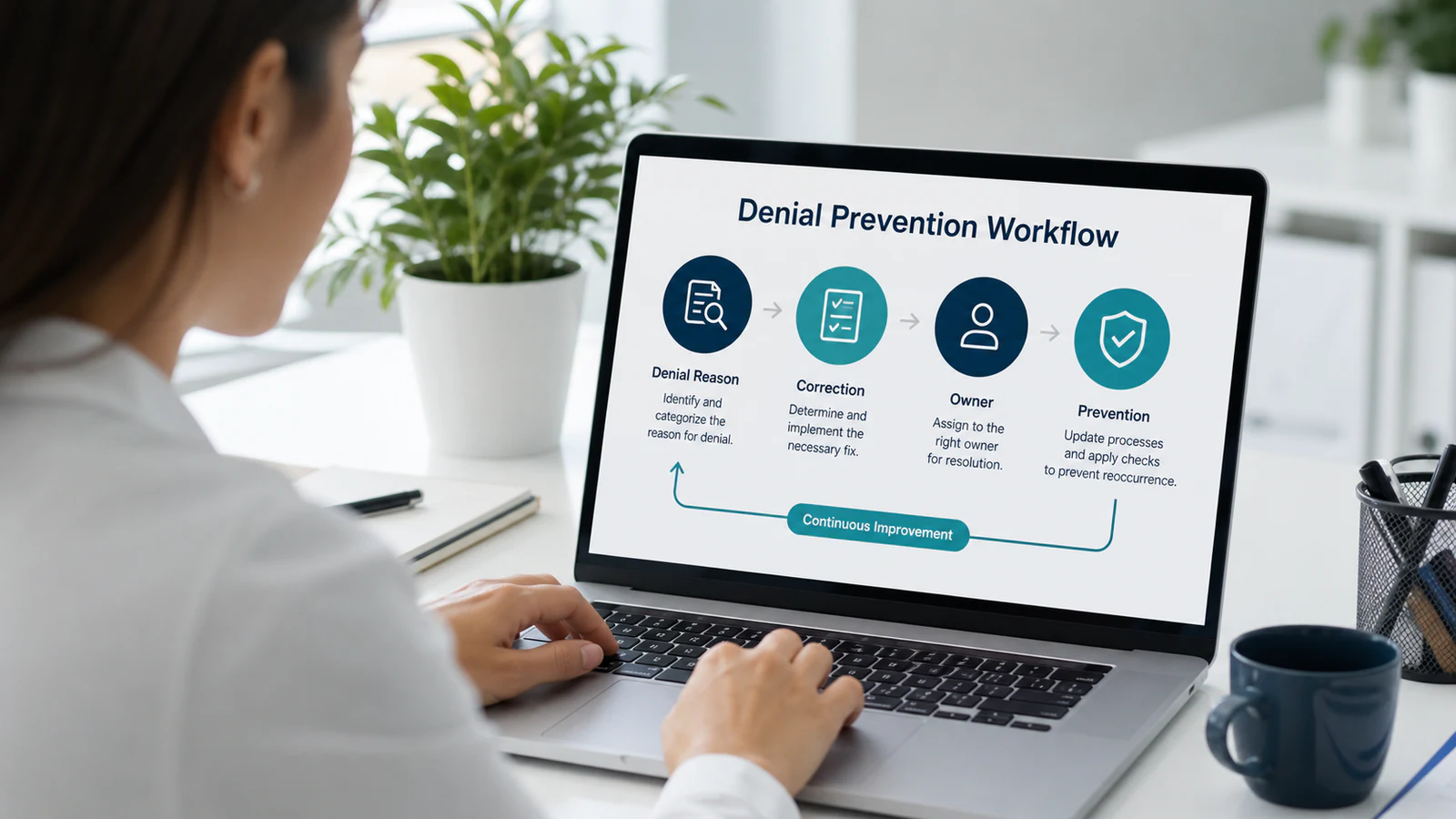
Working denials is necessary, but it is not the same as preventing them. A learning denial workflow resolves the balance, identifies the operational cause, assigns the prevention action, and verifies whether the same category improves over time.
Create categories your team can act on
Payer adjustment codes are useful, but they do not always describe the operational cause. Build internal categories that connect the denial to a responsible workflow such as eligibility, authorization, coding, documentation, timely filing, payer enrollment, medical necessity, or coordination of benefits.
Separate correction from prevention
The person correcting a claim may not own the upstream change. Document both actions: what will resolve the current balance and what should change before the next encounter. This prevents denial worklists from becoming an endless cycle of corrected claims with no process improvement.
- Record the immediate claim action and due date.
- Assign an upstream prevention owner.
- Track payer requests and appeal deadlines.
- Close the loop only after the claim and root cause are addressed.
Prioritize by risk, not only by age
Age matters, but so do filing limits, appeal windows, balance, payer behavior, and likelihood of recovery. A practical queue combines those factors so high-risk claims receive attention before they become avoidable write-offs.
Review trends with the people who can change them
A monthly denial report should lead to decisions. Share the top categories, financial impact, repeat providers or locations, payer-specific changes, and assigned improvement actions. A concise review with accountable owners is more valuable than a large report no one uses.
- Denial rate and volume by category
- Appeal status and deadline exposure
- Repeat causes by payer, provider, and location
- Prevention action, owner, and review date
Practical takeaway
The strongest denial program does two jobs at once: recover the claim in front of you and reduce the chance that the same preventable issue returns.
Discuss Denial and A/R SupportThis article provides general educational information and is not legal, coding, clinical, or payer-contract advice. Requirements vary by payer, state, specialty, and organization.